Suffering From Knee Pain? Beginner’s Guide to Knee Health: Restoring Flexibility and Strength
1. Introduction: The Philosophy of “Tilling the Land”
In clinical practice, we often see patients who view rehabilitation as a temporary fix even when it comes to knee pain. However, true recovery is better understood through the metaphor of “tilling the land.” As a senior physiotherapist, I often tell my patients that the body is like a field; if you do not consistently till the soil and maintain its health, “weeds” of stiffness and dysfunction begin to grow. If even one corner of the field is neglected, the infection spreads, ultimately ruining the yield of the entire harvest.
Also see: Mostfit Sports Injury Therapy Solutions
To achieve a successful harvest—which in this case is pain-free movement—you must embrace the 90/10 split. Professional clinical intervention provides the essential 10% of expert guidance, but the remaining 90% is the personal effort you exert every day. Whether you are managing knee pain due to chronic arthritis or preparing for a surgical procedure, your daily commitment to “tilling” your physical health is the primary determinant of your outcome.
[!IMPORTANT] Key Insight: Surgery is a New Beginning– Surgery is not the final destination of your journey; it is a fresh start. A procedure can provide a functional joint and alleviate acute knee pain, but the long-term success of that “new knee” depends entirely on your ability to rehabilitate it and improve the surrounding structures through consistent, active movement.
Understanding this mindset is the first step toward recovery, particularly when you realize that a limitation in the knee is never truly isolated to the knee alone.
2. The Ripple Effect: Why Knee Pain Isn’t Just About the Knee
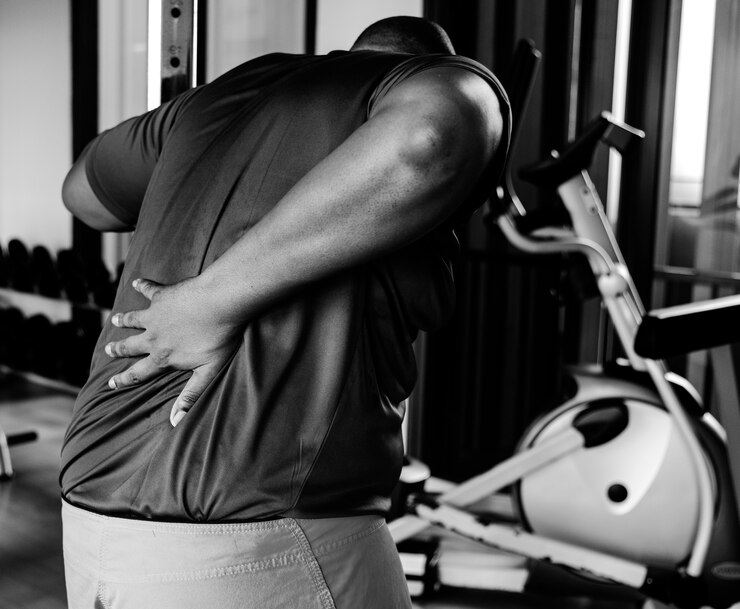
The human body is an intricately connected system of levers and pulleys. When the knee joint is compromised, the body instinctively attempts to “protect” the area through compensation. You may begin to limp—a change in gait so subtle you might not notice it until it is pointed out. This shift in mechanics creates a ripple effect, moving stress and strain to the “neighboring” joints.
| Affected Area | Impacted Neighbors | Description of Clinical Impact |
| The Knee | The Hip & Back | As you limit knee movement to avoid pain, the hip and lower back must work harder to propel you forward, leading to secondary stress and localized back pain. |
| The Knee | The Ankle | A stiff knee limits the natural “roll” of the foot, reducing ankle mobility, which impairs balance and limits circulation in the lower limb. |
| The Knee | The Opposite Leg | To spare the “bad” knee, the opposite leg takes on nearly double the pressure and stress, often leading to wear and tear on the healthy side. |
By addressing the knee, we aren’t just fixing a joint; we are restoring the “yield” of your entire body’s movement.
Also: Break Free From Your Pain With Expert Physiotherapy Services
3. Mastering the Mechanics: Flexion, Extension, and Range of Motion (ROM)
Before we focus on power, we must restore your Range of Motion (ROM). This is defined by two fundamental movements: Flexion (bending the knee toward the body) and Extension (straightening the leg). These exercises are designed to maintain the joint’s movement capacity rather than just building muscle. The beauty of these movements is their accessibility; they can be performed on a bed, a couch, or even while watching a movie.
- Heel Slides (Seated or Lying Down)
- The Goal: Gently restore flexion capacity. Pull your heel toward your glutes as far as the joint allows, then slide it back out.
- The Complete Straighten
- The Goal: To prevent the joint from becoming “locked” in a bent position. When extending the leg, you must ensure the knee goes completely straight.
- Lying Knee Tucks
- The Goal: While lying on your back, pull the knee toward your chest.
- Clinical Note: This movement is vital because it stretches the glutes and relieves the pressure that builds up in the lower back due to compensatory limping.
Establishing this baseline of movement allows us to safely transition into the next phase: applying resistance.
- Building Strength: Resistance Training with Bands
Once the joint moves freely, we must strengthen the quadriceps and hamstrings to support it. Moving from passive stretching to active resistance is a critical step in “tilling” your physical health. A Thera-band is an essential tool for this transition.
Step-by-Step Band Training
- Setup: While lying down or seated, loop a resistance band around the arch of your foot.
- Establish Control: This is the most crucial element of the exercise. Your leg must maintain absolute control over the band. Never allow the band to “snap” your leg back into position.
- The Concentric Phase (The Push): Push your leg forward against the band’s resistance until the knee is fully extended.
- The Eccentric Phase (The Return): This is just as important as the push. Slowly allow the knee to bend back toward you, resisting the pull of the band. This two-way movement ensures the muscle is actively contracting and relaxing correctly.
- Knee Press (Extension Focus): Place a support, such as a rolled-up towel or foam roller, directly under the knee. Using the band for added resistance, push the back of your knee down into the towel, then allow it to rise slowly.
While these large muscle groups provide the power for movement, the ankle provides the foundational stability required for every step you take.
5. The Essential Tool: Ankle Pumps for Stability and Circulation
The ankle is the foundation of the lower limb, yet it is often the “forgotten neighbor” in knee rehabilitation. Ankle pumps can be performed as a standalone exercise or combined with a Thera-band to increase resistance and progress your training.
How to perform: Move your foot up and down (flexing toward the shin and pointing away). Follow this by moving the ankle inward and outward (inversion and eversion), essentially pointing your toes toward the midline and then away from it.
Primary Benefits:
- Calf Flexibility: Regularly performing these pumps stretches the calf muscles, which often become chronically tight in patients who have been limping.
- Improved Balance: Strengthening the stabilizers in the ankle is essential for a steady, confident gait.
- Joint Rehabilitation: This rehabilitates the ankle joint itself, protecting it from the stress shifted down from a painful knee.
[!TIP] Pro-Tip: Rhythmic Breathing- Do not hold your breath during these movements. Practice rhythmic breathing—inhaling and exhaling steadily—to ensure oxygen flow to the muscles and to help the body remain relaxed during the stretch.
6. The Golden Rules of Pain-Free Progress: Knee Pain Relief
In the clinic, we emphasize that progress should never be forced. Pushing through sharp pain is counterproductive and can lead to further inflammation.
“Don’t force the knee into pain. If your movement is limited to a certain point, reach that point and control the movement from there.”
The Beginner’s Success Checklist
| Action | Beginner’s Rule |
| Symmetry | Always perform exercises on both the left and right sides to ensure the “healthy” side remains strong and balanced. |
| Resistance | Focus on the slow return (the eccentric phase); do not let the band pull your leg back. |
| Consistency | Use “anytime” moments—such as watching television or sitting in the office—to perform your ROM exercises. |
| Pain Threshold | Respect the point of limitation; stop just before the onset of intense pain. |
| Breathing | Maintain a steady inhale/exhale cycle to support muscle contraction and relaxation. |
By adhering to these rules and committing to your daily “tilling,” you are not just managing symptoms—you are cultivating the strength and flexibility required for a truly pain-free daily living.
Need professional physiotherapy treatment from experts for your knee pain?
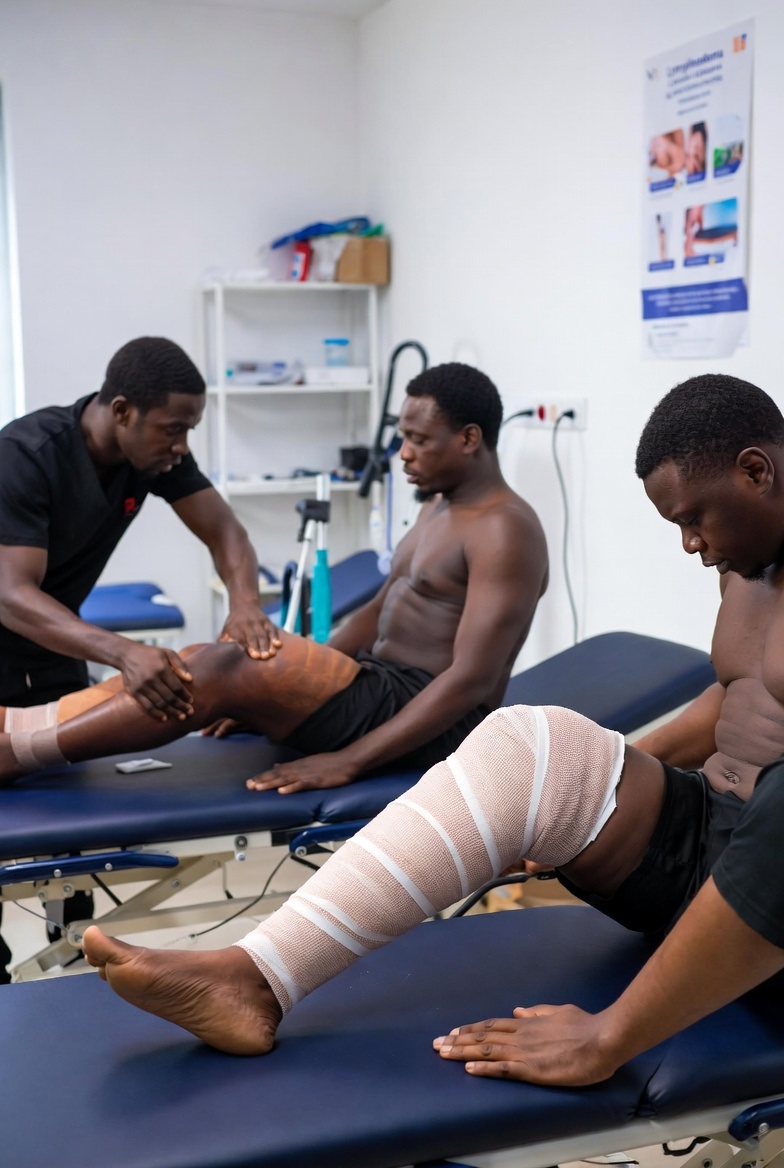
At Mostfit Physiotherapy Center, we are experts in treating knee pain and other forms of pain issues that require physiotherapy. We have the best physiotherapist in Nairobi with extensive knowledge and experience to handle different types of pain issues. If you are in need of expert physiotherapy attention please feel free to get in touch with us.
Start Your Journey Today Contact us to Book an Appointment
Ready to take the first step? Contact us for a professional knee pain assessment and get the relief you deserve.
 Find Us: Ring Road, Parklands Road (Inside Kenya Drapers Compound)
- Call/WhatsApp: 0743217360
- Website: www.mostfitphysiocenter.com
 Find Us: Ring Road, Parklands Road (Inside Kenya Drapers Compound)
 Call/WhatsApp: 0743217360
 Website:
Mostfit Physiotherapy Centre – Your Touch of Care.