Walk Without Pain: Evidence-Based Physiotherapy for Lasting Mobility and Strong Joints
Walking is one of the most natural and beneficial forms of movement. Yet for many people in Nairobi, each step brings discomfort. Knee pain, back pain, or heel pain can quietly shrink your world. You may stop taking morning walks. You may avoid stairs. You may decline social outings because you cannot keep up. This does not have to be your reality. At Mostfit Physiotherapy Center, we help people walk without pain by treating the cause, not just the symptom.
Why Does Walking Hurt? Understanding the Root Causes
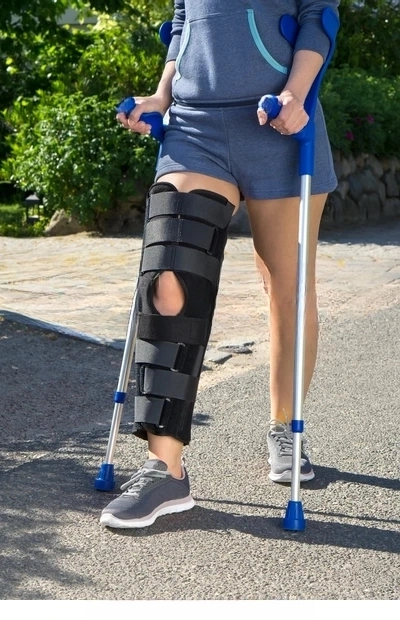 Walking pain rarely appears without reason. It is a signal that something in your body is overloaded, inflamed, or not moving as it should. The cause may be mechanical, neurological, or vascular. Identifying the correct category is the first step towards effective treatment. A physiotherapist can distinguish between these sources and direct you to the right care.
The most common causes we see at our Nairobi clinic fall into three broad groups. Joint and soft tissue conditions include knee osteoarthritis, plantar fasciitis, and hip pain. Nerve-related pain includes sciatica and lumbar spinal stenosis. Vascular conditions, such as peripheral artery disease, cause pain that appears with walking and eases with rest. Each requires a different approach.
How Clinical Gait Analysis Reveals the Hidden Causes of Walking Pain
Clinical gait analysis is the systematic observation, recording, and interpretation of how you walk. It goes beyond watching you take a few steps. It measures timing, stride length, joint angles, and pressure distribution. This objective data helps us understand why you hurt, not just where you hurt.
A proper gait assessment can reveal compensations you did not know you had. You may be favouring one leg without realising it. Your trunk may lean excessively. Your foot may roll inwards or outwards more than it should. These patterns increase load on specific tissues and cause pain. By correcting them, we reduce pain and improve your walking tolerance.
Evidence-Based Physiotherapy Treatments That Help You Walk Without Pain
The evidence strongly supports exercise therapy as a first-line treatment for walking-related pain. A major systematic review published by The BMJ analysed 217 randomised trials with over 15,000 participants. It found that aerobic exercise, such as walking, cycling, or swimming, was the most effective exercise type for relieving pain and improving gait in knee osteoarthritis.
We use several evidence-based strategies in combination. Exercise therapy builds strength and endurance. Manual therapy reduces stiffness and improves joint mobility. Gait retraining teaches you to move in ways that reduce load on painful structures. Walking aids, such as a cane used on the opposite side, can offload a painful knee or hip and reduce pain during walking. We tailor the mix to your specific condition and goals.
What the Research Says About Walking and Joint Pain
 The evidence around walking and joint pain is nuanced. Walking is not harmful for most people with knee osteoarthritis. In fact, it is often part of the solution. The BMJ review concluded that aerobic exercise should be considered a first-line intervention for knee osteoarthritis, particularly when the aim is to improve function and reduce pain. Harvard Health summarised the same study, noting that lower-impact aerobic exercises are the best options for people with knee osteoarthritis.
However, not all gait interventions work equally. A randomised feasibility trial published in Arthritis Care & Research compared gait retraining with a standard walking programme. It found that gait retraining was no more effective than simply walking more for reducing knee pain and loading. This tells us that consistent, progressive walking is itself a powerful treatment. The key is to walk at the right dose and with the right support.
A Step-by-Step Approach to Walking Without Pain
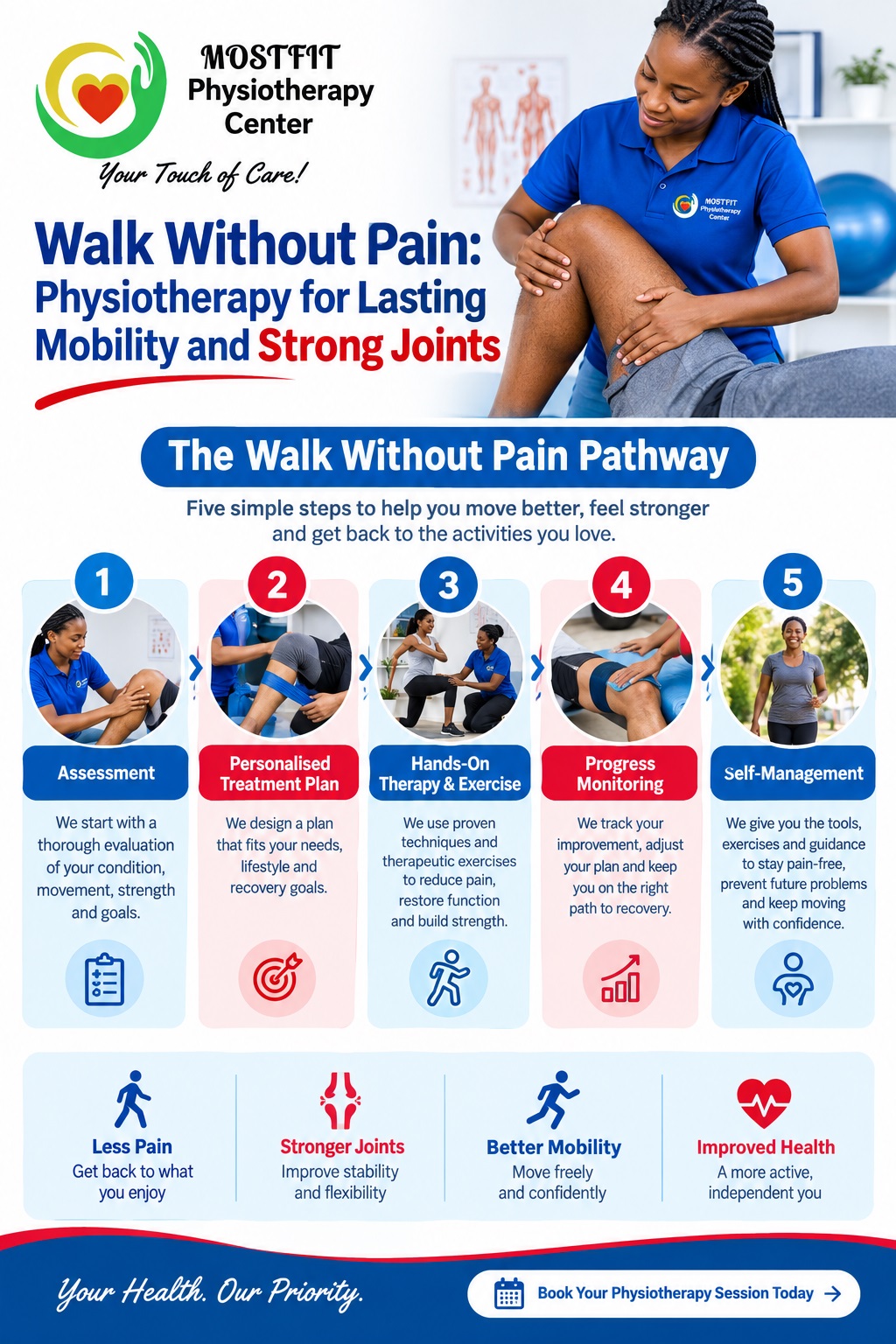
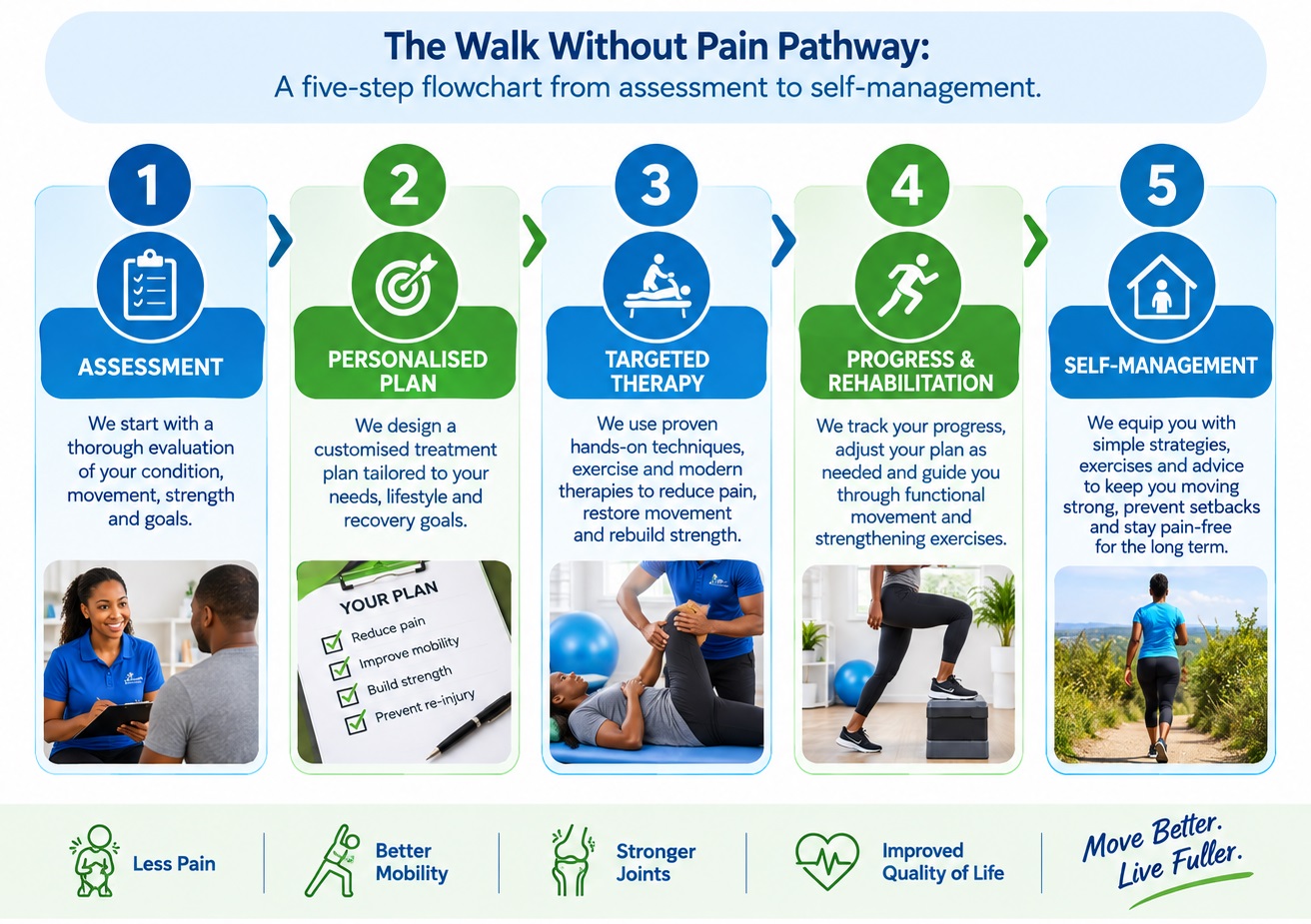
We follow a structured process to help you return to pain-free walking. This approach is grounded in clinical guidelines and adapted to your individual presentation.
- Comprehensive assessment. We take a detailed history and perform a physical examination. We may use video gait analysis to identify biomechanical faults.
- Diagnosis and explanation. We explain what is causing your pain in clear terms. You leave the first session understanding your condition.
- Personalised treatment plan. We design a plan that combines manual therapy, targeted exercises, and gait retraining.
- Progressive loading. We gradually increase your walking tolerance. This may involve short, frequent walks rather than long, painful ones.
- Education and self-management. We teach you strategies to manage flare-ups and maintain progress. You become an active partner in your recovery.
Why Choose Mostfit Physiotherapy Center in Nairobi?
Nairobi has many physiotherapy providers, including large hospitals. We believe our difference lies in our focus. We are a specialist clinic dedicated to musculoskeletal rehabilitation. Our physiotherapists are registered with the Physiotherapy Council of Kenya, the statutory body that regulates our profession under the Physiotherapists Act, No. 20 of 2014. We are committed to evidence-based practice and continuous professional development.
We are located at Ring Road Parklands, inside the Kenya Drapers Compound. This makes us accessible to patients across Nairobi. We combine hands-on treatment with exercise prescription and education. We do not just treat your pain. We give you the tools to keep walking without pain long after your course of treatment ends.
Frequently Asked Questions About Walking Without Pain
- Is walking bad for knee pain?
No. For most people with knee osteoarthritis, walking is beneficial. A large review published by The BMJ found that aerobic exercise like walking is the best exercise for relieving pain and improving function. The key is to walk at a manageable dose and build up gradually. - Can physiotherapy help me walk without pain?
Yes. Physiotherapy is a first-line treatment for walking-related pain. It addresses the underlying causes, such as muscle weakness, joint stiffness, and poor gait mechanics. A 2025 randomised trial found that a movement system impairment approach significantly reduced pain during walking after six weeks. - How long does it take to see results?
Many patients notice improvement within four to six weeks. The exact timeline depends on your condition, its severity, and how consistently you follow your programme. Chronic conditions may take longer. - Do I need a doctor’s referral to see a physiotherapist?
In Kenya, you can access physiotherapy directly. You do not need a referral from a doctor. However, if your pain is caused by a medical condition that requires medical management, we will liaise with your doctor.
Your Next Step Towards Pain-Free Walking
Living with walking pain is not something you have to accept. Whether your pain comes from arthritis, a sports injury, or chronic back issues, there is a path forward. We have helped many people in Nairobi regain their mobility and confidence. We would like to help you do the same.
Do not wait for the pain to get worse. Book an assessment at Mostfit Physiotherapy Center today. Call or WhatsApp us on 0743 217 360. Visit us at Ring Road Parklands, Nairobi, inside the Kenya Drapers Compound. Recovery begins with one decision. Make today the day you choose better movement.
References
- Chester, V. L., Biden, E. N., & Tingley, M.
Gait Analysis
Biomedical Instrumentation & Technology
Accessed 16 September 2026
https://pubmed.ncbi.nlm.nih.gov/15742852/ - Harvard Health Publishing
When walking becomes a pain
Harvard Medical School
Accessed 16 September 2026
https://www.health.harvard.edu/pain/when-walking-becomes-a-pain - Harvard Health Publishing
Walking, cycling, and swimming are best exercises for knee osteoarthritis
Harvard Medical School
Accessed 16 September 2026
https://www.health.harvard.edu/bones-and-joints/walking-cycling-and-swimming-are-best-exercises-for-knee-osteoarthritis - James, K. A., Corrigan, P., Huang, C.-H., et al.
Gait Retraining to Reduce Tibial Acceleration Versus a Standard Walking Program for Reducing Knee Pain and Loading in Adults With Knee Osteoarthritis: A Randomized Feasibility Trial
Arthritis Care & Research
Accessed 16 September 2026
https://acrjournals.onlinelibrary.wiley.com/doi/10.1002/acr2.70079 - Physiotherapy Council of Kenya
About the Physiotherapy Council of Kenya
Physiotherapy Council of Kenya
Accessed 16 September 2026
https://pck.go.ke/about-physiotherapy-council-kenya - The BMJ
Walking, cycling and swimming likely best exercise for knee osteoarthritis
BMJ Group
Accessed 16 September 2026
https://bmjgroup.com/walking-cycling-and-swimming-likely-best-exercise-for-knee-osteoarthritis/ - Harvard Health: When walking becomes a pain (https://www.health.harvard.edu/pain/when-walking-becomes-a-pain)
- The BMJ: Comparative efficacy and safety of exercise modalities in knee osteoarthritis (https://www.bmj.com/content/391/bmj-2025-085242)