Avoid Quick Fixes for Your Pain – Get Professional Physiotherapy in Nairobi
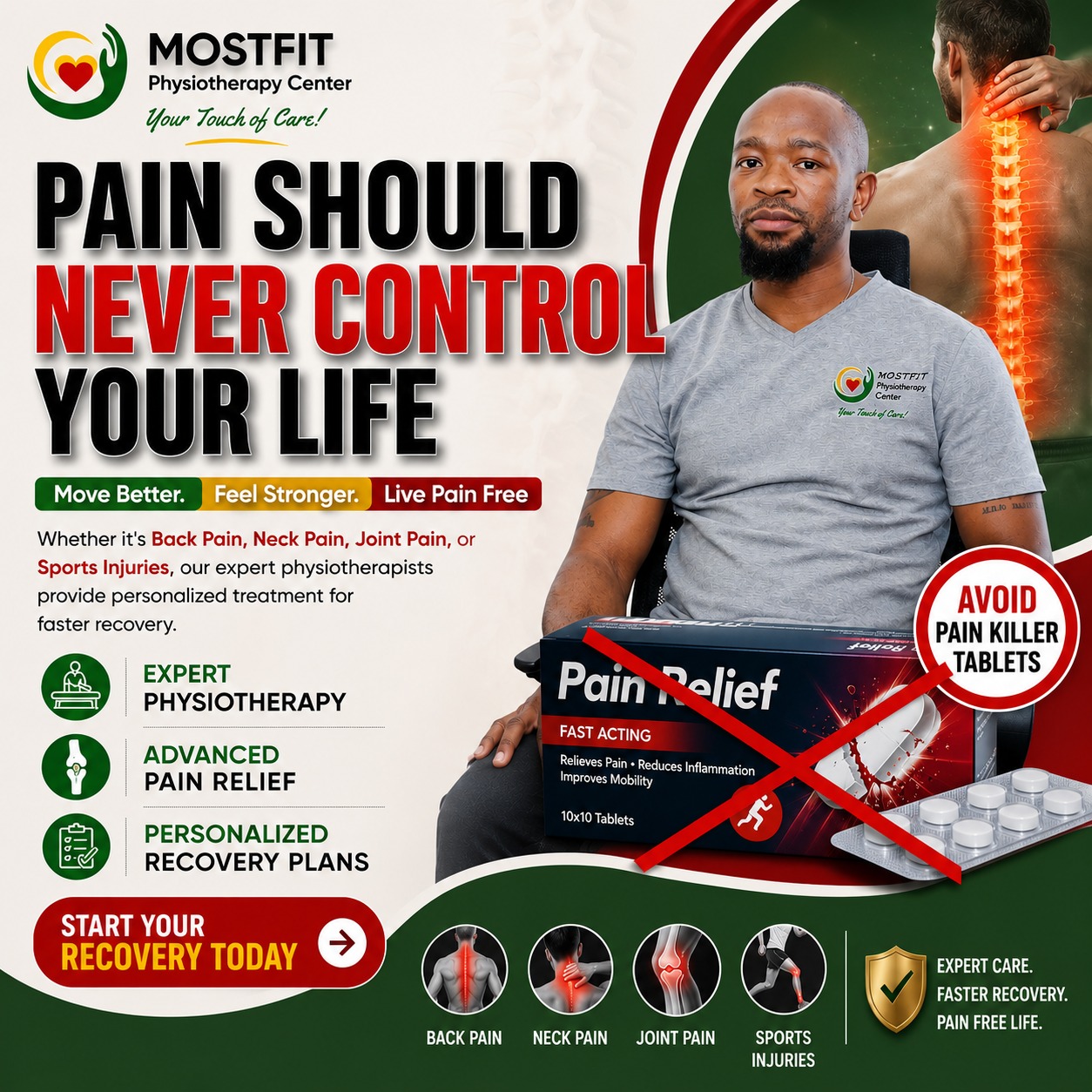
Painkillers may dull the pain for a few hours. Rest may help for a few days. But lasting recovery starts with understanding why the pain exists in the first place. We see too many patients who have spent months relying on temporary fixes, only to find their condition has worsened. Pain relief is just the beginning. Your recovery deserves more than a quick fix. Avoid quick fixes for your pain and get professional physiotherapy at Mostfit Physiotherapy Center.
At Mostfit Physiotherapy Center, every recovery journey begins with a thorough assessment and a personalised treatment plan designed around you – not just your symptoms. Led by Senior Physiotherapist and Founder, Abraham Linley Moganda, our mission is simple: to help you move better, become stronger, and enjoy life without pain.
Why Quick Fixes Fail to Deliver Lasting Relief
Quick fixes are tempting. A painkiller suppresses the signal. A few days of rest reduces immediate discomfort. But these approaches do not address the underlying cause of your pain. Research shows that 65% of patients treated with pain medication alone experience pain recurrence once the medication’s effects subside. In contrast, 73% of physical therapy users report long-term injury resolution.
Painkillers and rest are temporary measures. They mask symptoms rather than resolve them. When you avoid quick fixes for your pain and get professional physiotherapy instead, you invest in a solution that treats the root cause. Physiotherapy addresses muscle imbalances, joint dysfunction, and movement patterns that contribute to persistent pain.
What the Evidence Says About Physiotherapy
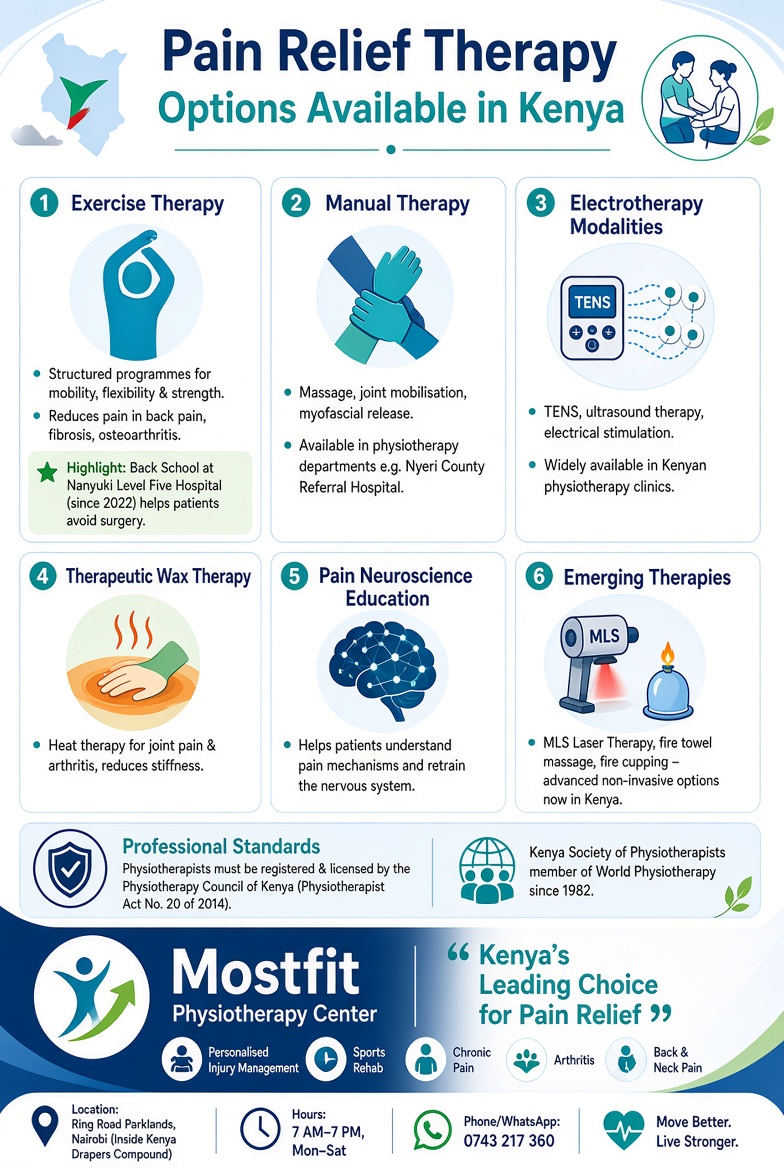 The World Health Organization places physiotherapy at the core of rehabilitation recommendations. The WHO’s Package of Interventions for Rehabilitation outlines essential, evidence-based interventions for 20 health conditions with high prevalence and associated disability.
Clinical guidelines consistently recommend physiotherapy as a first-line treatment for musculoskeletal conditions. The UK’s NICE guideline NG59 recommends manual therapy and exercise as part of a treatment package for low back pain. Research indicates that exercise is the only intervention proven to provide long-term improvement in patients with chronic low back pain.
A 2025 study published in Orthopedic Reviews found that physical therapy was more effective than pain medication alone for sustained recovery from sports-related injuries. Among participants who used both treatments, 68.2% indicated that physical therapy was more effective for sustained recovery.
Common Conditions We Treat with Evidence-Based Physiotherapy
We treat a wide range of conditions using techniques supported by clinical research and professional standards.
- Persistent Back Pain
Low back pain affects approximately 30% of the global population. Disability due to low back pain has increased by 54% since the 1990s. Our approach combines manual therapy, exercise prescription, and patient education to reduce disability and restore function. - Neck and Shoulder Pain
Poor posture, prolonged sitting, and repetitive strain commonly cause neck and shoulder pain. We use targeted mobilisation, strengthening exercises, and ergonomic advice to address these issues. - Joint Pain and Osteoarthritis
A systematic review of clinical practice guidelines for hip and knee osteoarthritis found consensus on examination and evaluation, including assessment of range of motion, balance, and activity tolerance. Exercise interventions to improve strength and mobility are the most common recommendations across all guidelines. - Sports Injuries
Sports injuries – including sprains, strains, and ligament injuries – require structured rehabilitation. Modern clinical practice guidelines emphasise criteria-based progression, neuromuscular retraining, and sport-specific conditioning. - Post-Surgery Rehabilitation
Recovery after surgery requires careful, progressive rehabilitation. We design individualised programmes that respect tissue healing timelines while restoring function and preventing complications. - Poor Posture and Reduced Mobility
Limited mobility affects quality of life and increases injury risk. Our programmes improve flexibility, strength, and movement confidence.
What to Expect from Professional Physiotherapy at Mostfit
 When you choose professional physiotherapy, you receive a structured, evidence-based approach to recovery.
- Comprehensive Assessment
Your first visit includes a detailed evaluation. We assess your medical history, movement patterns, strength, flexibility, and functional limitations. This assessment identifies the root cause of your pain, not just the symptoms. - Personalised Treatment Plan
We create a treatment plan tailored to your specific condition, goals, and lifestyle. Research shows that individualised plans reduce the risk of recurrence and increase the chances of stable long-term recovery. Your plan may include:
- Manual therapy techniques
- Therapeutic exercise prescription
- Postural and ergonomic advice
- Pain management strategies
- Progress monitoring and adjustment
- Evidence-Based Interventions
We use interventions supported by clinical research. These include exercise therapy, manual therapy, and patient education. Active physiotherapy – where you participate actively in your recovery – produces better results than passive approaches alone. - Ongoing Support and Progress Tracking
Recovery is not linear. We track your progress, adjust your programme as needed, and provide the support you need to stay on track.
Avoid Quick Fixes for Your Pain – Why Choose Mostfit Physiotherapy Center in Nairobi
The physiotherapy market in Nairobi is competitive, with top hospitals and clinics offering similar services. What sets Mostfit apart is our commitment to personalised, evidence-based care delivered by experienced professionals.
- Expert Leadership: Our founder, Abraham Linley Moganda, brings years of clinical experience and a deep understanding of musculoskeletal health.
- Patient-Centred Approach: We treat you as an individual, not a diagnosis. Your goals and preferences guide your treatment.
- Evidence-Based Practice: We base our interventions on the best available research and clinical guidelines.
- Convenient Location: We are located in Westlands, Nairobi, inside Kenya Drapers Compound on Ring Road Parklands.
- Comprehensive Services: From back pain to sports injuries to post-surgery rehabilitation, we cover the full spectrum of physiotherapy needs.
Frequently Asked Questions
- How long does physiotherapy take to work?
The timeline varies depending on your condition, its severity, and your adherence to the treatment plan. Many patients notice improvement within a few sessions. Chronic conditions may require several weeks of consistent treatment. - Is physiotherapy painful?
Physiotherapy should not cause severe pain. You may experience some discomfort during certain exercises or techniques, but we always work within your tolerance. We communicate clearly about what to expect. - Do I need a doctor’s referral?
In most cases, you can book a physiotherapy appointment without a referral. However, we recommend checking with your insurance provider regarding coverage requirements. - Can physiotherapy prevent future injuries?
Physiotherapy addresses muscle imbalances, movement dysfunctions, and other risk factors that predispose you to injury. Many patients continue with maintenance programmes to prevent recurrence. - How do I book an appointment?
Contact us by phone at +254 743 217 360 or email info@mostfitphysiocenter.com. We are open Monday to Saturday, 7 AM to 7 PM.
Avoid Quick Fixes for Your Pain – Get Professional Physiotherapy
Take the First Step Toward Lasting Recovery
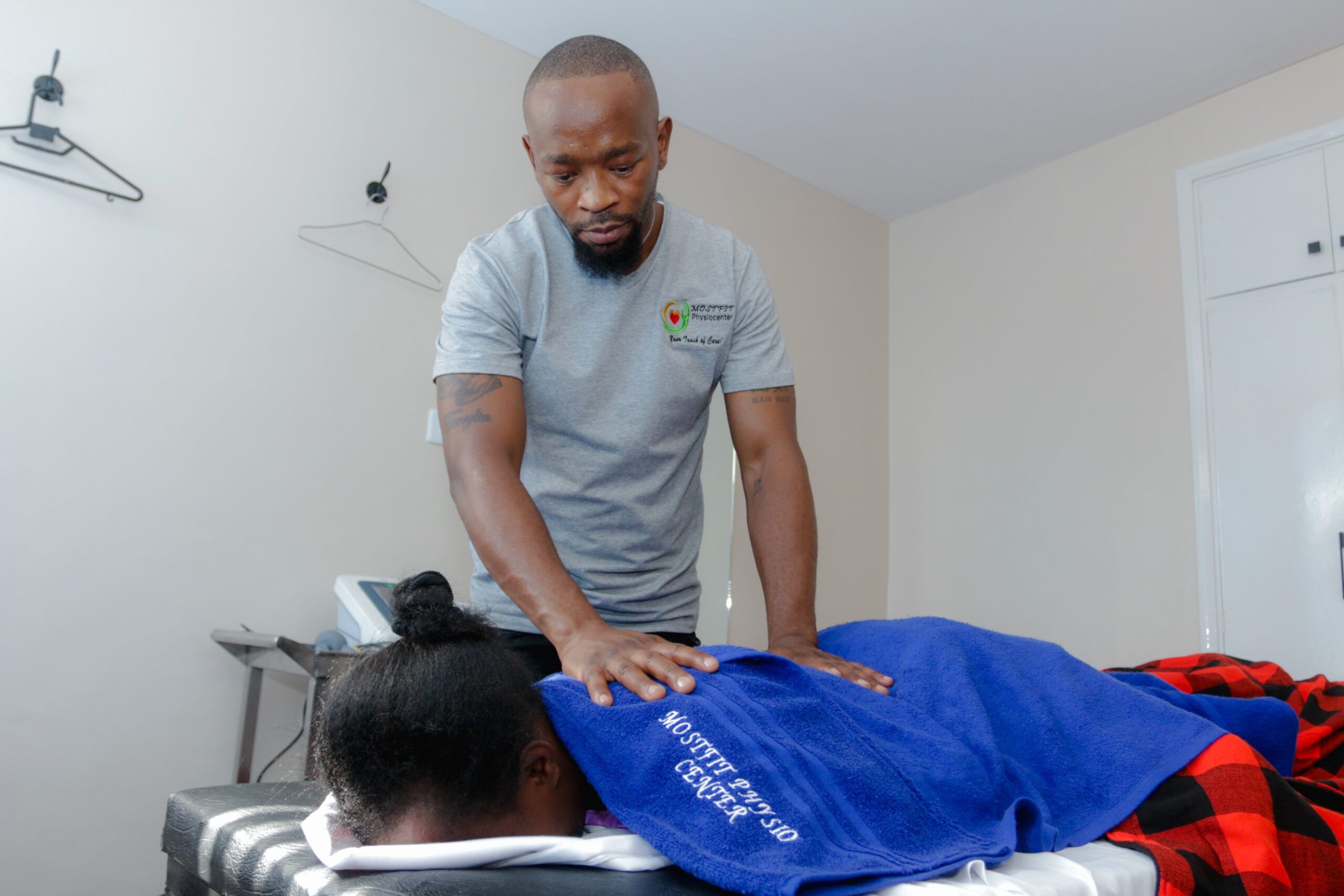 You do not have to live with pain. You do not have to rely on temporary fixes that leave you vulnerable to recurrence. Professional physiotherapy offers a path to lasting recovery – one that addresses the root cause of your pain and builds the strength and confidence you need to move freely.
We understand that choosing a physiotherapy provider in Nairobi can feel overwhelming. With so many options available, how do you know who to trust? Look for evidence-based practice, personalised care, and a team that listens to you. That is what we offer at Mostfit Physiotherapy Center.
Every step you take without pain matters. Every staircase you climb with ease matters. Every morning you wake up feeling stronger matters. That is the outcome we work toward with every patient who walks through our doors.
Book your consultation today. Let us help you move better, live stronger, and enjoy life without pain.
Contact Mostfit Physiotherapy Center
- 📍 Ring Road Parklands, inside Kenya Drapers Compound, Nairobi (100 metres from The Oval)
- 📞 +254 743 217 360
- 📧info@mostfitphysiocenter.com
- 🕐 Monday–Saturday, 7 AM – 7 PM
References:
- Choksey I, Iftikhar N, Ganti L
The Relative Effectiveness of Physical Therapy and Pain Medication in Managing Sports-related Injuries
Orthopedic Reviews
Accessed 8 September 2026
https://orthopedicreviews.openmedicalpublishing.org/article/143577 - World Health Organization
Package of Interventions for Rehabilitation
WHO
Accessed 8 September 2026
https://www.who.int/teams/noncommunicable-diseases/sensory-functions-disability-and-rehabilitation/rehabilitation/service-delivery/package-of-interventions-for-rehabilitation - Wang X-Q, Wang Y-L, et al.
Physical therapy for acute and sub-acute low back pain: a systematic review and expert consensus
Clinical Rehabilitation, 2024
Accessed 8 September 2026
https://journals.sagepub.com/doi/full/10.1177/02692155241229398 - Mehta SP, Donachy B, et al.
A Systematic Review of Clinical Practice Guidelines for Physical Therapy Management of Hip and Knee Osteoarthritis
Critical Reviews in Physical and Rehabilitation Medicine, 2026
Accessed 8 September 2026
https://www.dl.begellhouse.com/journals/757fcb0219d89390,6a07db1a6e95f0aa,6b5fc47b3d5f8022.html - Effectiveness and cost-effectiveness of chiropractic and physiotherapy for chronic low back pain: a multicenter RCT in Sweden
BMC Musculoskeletal Disorders, 2025
Accessed 8 September 2026
https://link.springer.com/article/10.1186/s12891-025-08392-7 - Scottish Intercollegiate Guidelines Network (SIGN)
Management of chronic pain (SIGN 173)
SIGN
Accessed 8 September 2026
https://www.sign.ac.uk/guidelines/management-of-chronic-pain - National Institute for Health and Care Excellence (NICE)
Low back pain and sciatica in over 16s (NG59)
NICE
Accessed 8 September 2026
https://www.nice.org.uk/guidance/ng59